The book

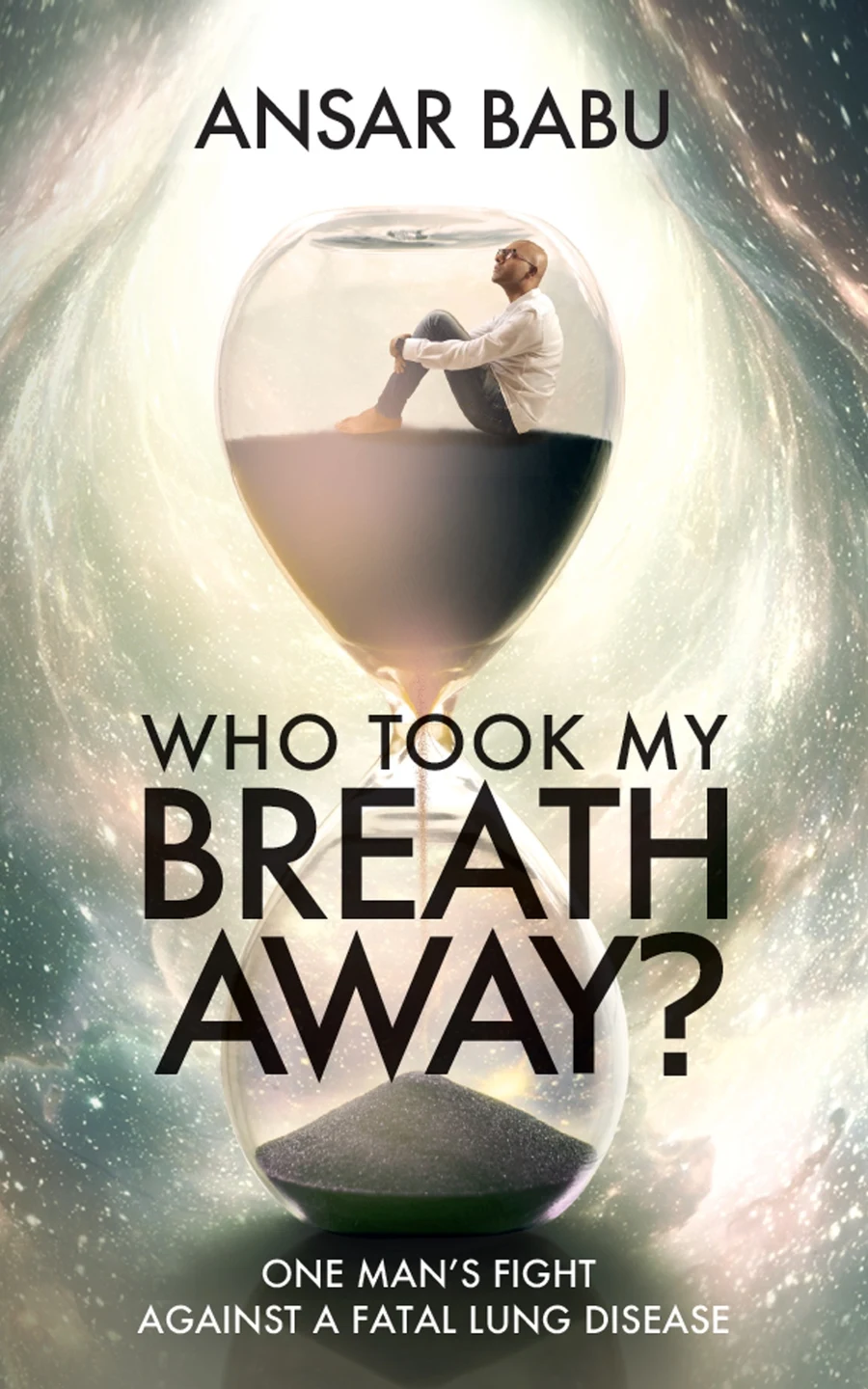
Who Took My Breath Away?

One man's fight against a fatal lung disease — and the year that began with a death sentence and ended with someone else's lungs.

Memoir· First published 2019· Paperback & eBook· Ansar Babu's first book

A belated birthday gift, from the universe

Shortly after his thirty-eighth birthday, in January 2018, Ansar Babu was told he had idiopathic pulmonary fibrosis. IPF scars the lungs until they can no longer do their one job. It has no cure, it usually arrives in a person's sixties, and it typically leaves three to five years. Nobody knows what causes it — that is what idiopathic means.

The memoir covers the year that followed. The diagnosis, and the strange administrative calm of being told you are dying. The slow subtraction of ordinary things: stairs, sentences, sleep. The wait for a match. And on 10 September 2018, a double lung transplant at Apollo Hospital in Chennai — eight months after the diagnosis, and considerably sooner than anyone had planned for.

Running alongside it is his wife Shehna, who is less a supporting character than a co-author of the survival. Their two children are the reason the book has an argument rather than just an account.

It is not a misery memoir. The structure moves between chapters and poems, and the register moves between grief and a fairly unsparing dark humour — the kind that turns up when the alternative is unbearable. Readers arrive expecting to be sad and report laughing more than they expected.

Did he survive or did he succumb? Well, here he is, with a story to tell.

“His narration was so mind-blowing that I couldn't close the book before reading it fully. This book for sure helps the medical staff to understand in detail what their patients and family members are going through, and enables the doctors, nurses and paramedics to serve them better.”
Dr K. Madhan Kumar — Heart-Lung Transplant Surgeon, at Apollo Hospital Chennai in 2018; today Kauvery Hospital, Chennai

What people took from it

★★★★★

“Ansar’s way of describing his journey put reality into this horrific malady. He tells his story with honesty and passion.”
stcroix2, Amazon · Verified reader

★★★★☆

“Ansar Babu’s book has no place for self-pity. His brutal sense of humour on his own life-threatening condition will make you realise how incapable we are of dealing with such situations — let alone overcoming them.”
Jabir, Amazon

★★★★★

“He never gave up, and tried to believe that God and his family would never let him down. This was a very real book to me because one week ago my husband was diagnosed with pulmonary fibrosis.”
autumn wolf, Amazon · Verified reader

★★★★★

“Well written, witty with dark humour throughout — you’ll laugh and cry. His story is one of perseverance and fight. I highly recommend this read to everyone.”
Amy, Goodreads

Reader reviews quoted from the book's Amazon and Goodreads pages.

Resilience, mortality and decision-making

Two decades running global marketing for airlines and destinations, and one year spent finding out what actually holds when everything else is removed. The talks put those two things in the same room. They are built for leadership teams, industry conferences and clinical audiences — not for motivational garnish.

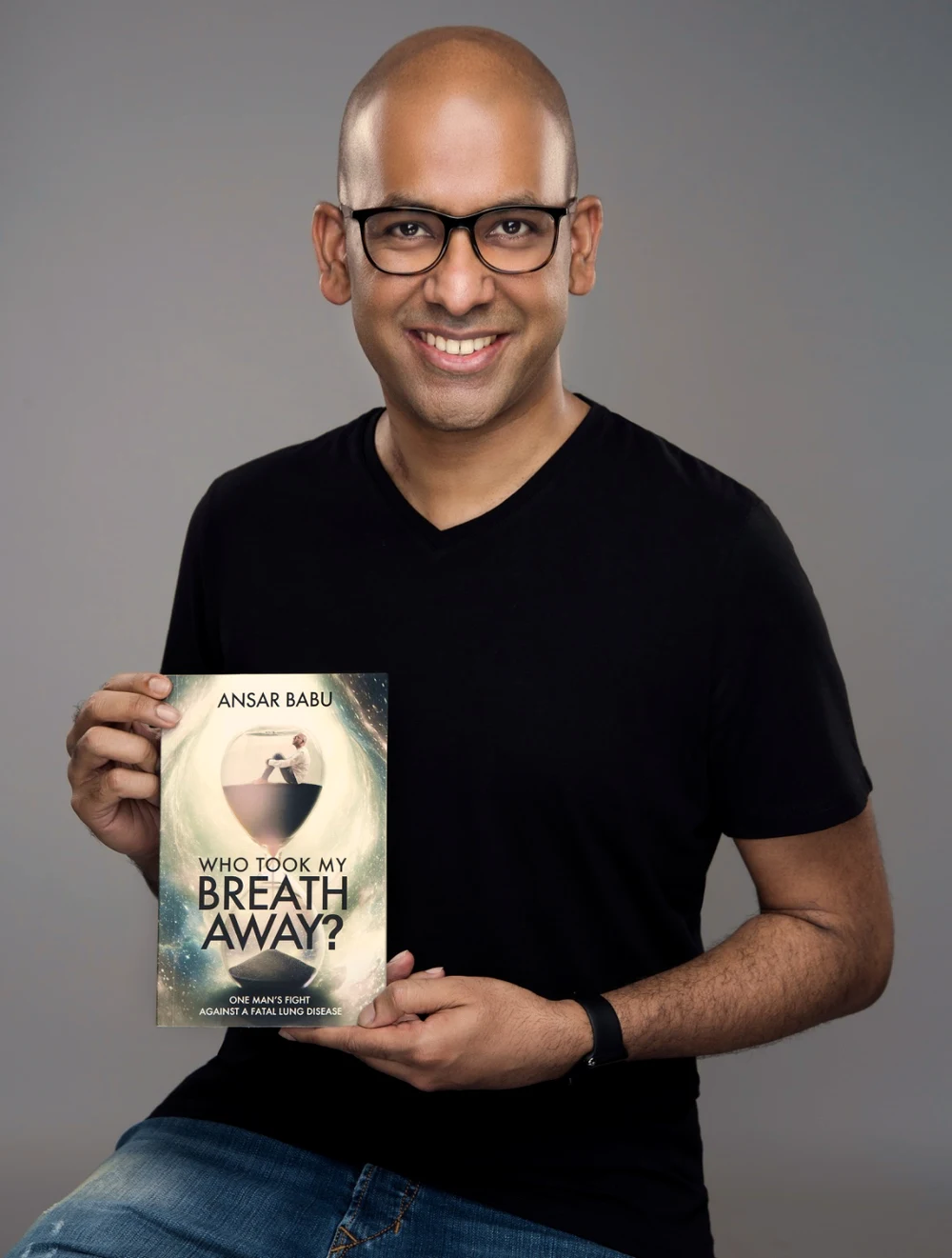
Ansar Babu holding a copy of Who Took My Breath Away?
  • 01

    What a terminal diagnosis teaches you about strategy

    Triage, sequencing and the discipline of deciding with incomplete information — learned in a hospital and applied in a boardroom.

  • 02

    Leading when the outcome is not yours to control

    Resilience without platitudes: how teams and families absorb bad news, and what leaders actually owe people during it.

  • 03

    The patient in the room

    For clinicians, transplant teams and healthcare organisations — the experience of care from the other side of the bed, where it breaks down, and the case for organ donor registration.

  • 04

    Second acts

    Returning to senior commercial leadership after a transplant, and building a career that assumes time is finite. Suited to culture and wellbeing programmes.

Formats: 30–45 minute keynote, fireside conversation, or a longer leadership workshop. Available in English, in person or remote.

The story stopped being private

Publishing turned a personal year into a public argument. Within a week of release, readers with lung disease were writing in from India, the UAE and the United States. Ansar registered as an organ donor on the UAE Ministry of Health and Prevention’s Hayat platform — a registry that did not exist when he needed lungs himself — and has used the coverage since to press the same point: transplant medicine in the UAE now works, and the binding constraint is consent.

For interviews, comment on organ donation policy, or patient-advocacy panels, get in touch directly.